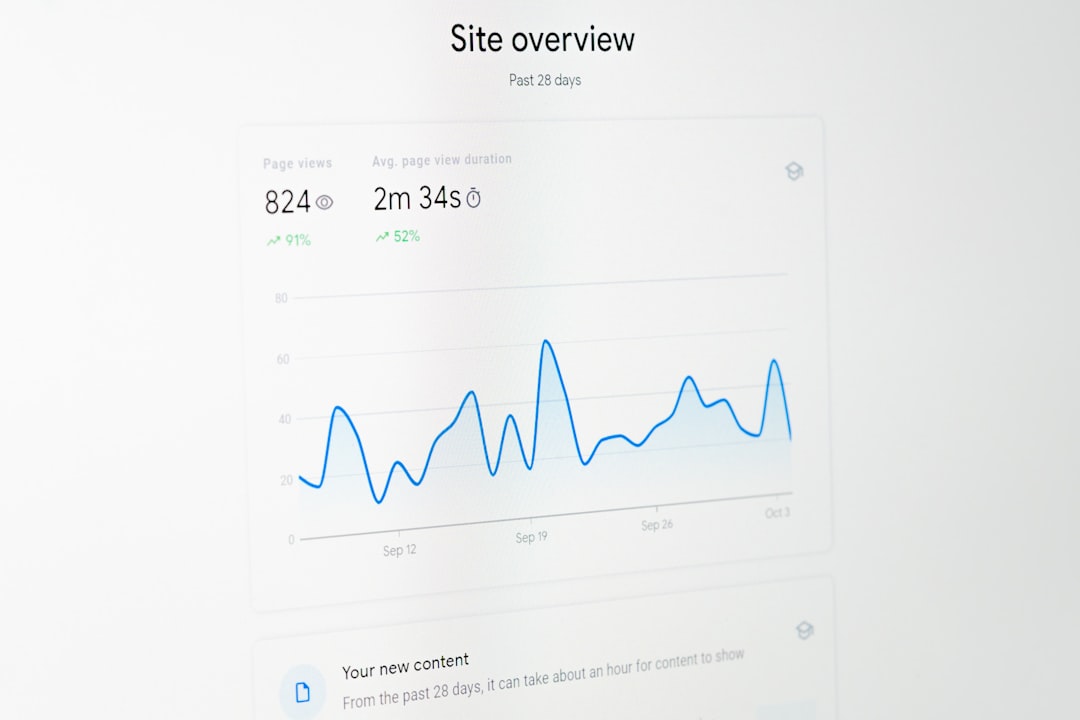
Photo by Justin Morgan on Unsplash
By Sky Highway Marketing · Med Spa Marketing Specialists · Last updated June 2026
Med spa website speed is costing you real bookings right now, and most owners have no idea it’s happening. Search Engine Journal reports that 53% of mobile users abandon a site that takes longer than three seconds to load. Your prospective patients aren’t waiting around. They’re closing your tab and booking with the spa down the street whose site opened instantly.
Key Takeaways
- A med spa website that loads in under two seconds converts significantly more visitors into booked appointments than one that takes four or more seconds, because mobile users abandon slow pages before seeing your services.
- According to Google’s Core Web Vitals framework, Largest Contentful Paint (LCP) should be under 2.5 seconds — most unoptimized med spa sites fail this benchmark on mobile.
- Run your site through Google PageSpeed Insights this week and note your LCP, Total Blocking Time, and Cumulative Layout Shift scores — these three metrics tell you exactly where to focus.
- The most common speed killer on med spa websites isn’t cheap hosting or bad code — it’s oversized, uncompressed before-and-after images uploaded straight from a phone or camera.
Why Website Speed Is a Booking Problem, Not Just a Tech Problem
Most med spa owners think of website speed as an IT issue. It’s not. It’s a revenue issue. Every second your site takes to load, you’re losing a percentage of the people your ad dollars just paid to bring there.
Consider this scenario: a single-location med spa spends $4,000 per month on Google Ads. Their site takes five seconds to load on mobile. If even 40% of clicks bounce before the page fully renders, that’s $1,600 in wasted ad spend every single month. The ads aren’t broken. The site is. If you’re working to determine the right Google Ads budget for your med spa, your website speed absolutely has to be part of that conversation.
Furthermore, Google uses page speed as a direct ranking signal. Slow med spa websites rank lower in search results. That means fewer organic visitors, lower ad Quality Scores, and higher cost-per-click. Speed problems compound quickly.
How to Measure Your Med Spa Website Speed
Before you fix anything, you need to know where you actually stand. Gut feelings don’t count here.
The Tools to Use
- Google PageSpeed Insights: Free, authoritative, and directly tied to how Google scores your site. Run both your mobile and desktop scores separately. Mobile is the one that matters most for med spas.
- GTmetrix: Gives you a waterfall view of every element loading on your page. Useful for pinpointing the specific files slowing you down.
- Google Search Console: Check the Core Web Vitals report. This shows real-world speed data from actual visitors, not just a lab simulation.
What Scores to Aim For
Google’s Core Web Vitals set specific targets your site should hit:
| Metric | Good | Needs Improvement |
|---|---|---|
| Largest Contentful Paint (LCP) | Under 2.5 seconds | 2.5 to 4.0 seconds |
| Interaction to Next Paint (INP) | Under 200ms | 200ms to 500ms |
| Cumulative Layout Shift (CLS) | Under 0.1 | 0.1 to 0.25 |
Most unoptimized med spa websites fail the LCP benchmark on mobile. That’s the one Google weighs most heavily, and it’s also the one your patients feel most acutely when they click your Instagram ad and wait.
The Biggest Speed Killers on Med Spa Websites
Here’s the honest truth: med spa sites have a specific set of speed problems that differ from most other industries. The aesthetic nature of the business means owners load up their sites with large, beautiful images. That’s understandable. But those images are often the primary reason the site crawls.
1. Oversized, Uncompressed Images
Before-and-after photos uploaded straight from an iPhone are often 4 to 8 megabytes each. Your website doesn’t need that much data to display a sharp image. Properly compressed versions of those same photos can weigh under 200 kilobytes with zero visible quality loss.
The fix: use a tool like Squoosh or ShortPixel to compress every image before uploading. Better yet, serve images in WebP format. Most modern browsers support it, and WebP consistently produces meaningfully smaller files than JPEGs at comparable visual quality. This single change often cuts load time in half on image-heavy med spa sites.
2. Too Many Plugins and Third-Party Scripts
Every booking widget, chat tool, review badge, and pixel you add to your site loads extra code. Each one adds milliseconds. Combined, they add seconds. A med spa site with a booking plugin, a Facebook Pixel, a Google Tag Manager setup, a Trustpilot widget, a live chat tool, and an SMS popup can easily carry ten or more third-party scripts firing on every page load.
Audit your scripts quarterly. Remove anything you’re not actively using. Delay the loading of non-critical scripts so the visible page loads first.
3. Slow or Shared Hosting
Cheap shared hosting is fine for a personal blog. It’s not fine for a med spa website generating tens of thousands of dollars in monthly revenue from online bookings. If your host is slow, everything else you optimize won’t fully compensate for it.
In 2026, managed WordPress hosting from providers like Kinsta, WP Engine, or Cloudways costs between $30 and $100 per month. For what you spend on a single ad campaign, you can put your site on infrastructure that delivers consistently fast load times. It’s one of the highest-ROI investments you can make for your site’s performance.
4. No Content Delivery Network (CDN)
A CDN stores copies of your site’s files on servers around the world. When a visitor loads your site, those files come from the server closest to them. Without a CDN, every visitor hits your single origin server, wherever it’s physically located. Cloudflare offers a solid free CDN tier that most med spa websites would benefit from immediately.
5. Render-Blocking JavaScript and CSS
Some code files prevent your page from displaying until they fully load. This is called render-blocking. Your visitors see a blank white screen while these files load in the background. Google PageSpeed Insights will flag these specifically. A developer can usually resolve this in a few hours by deferring non-critical scripts and inlining critical CSS.
The Mobile-First Reality for Med Spa Marketing in 2026
The med spas that win at conversion optimization know one thing above all: their patients are booking on phones, not desktops. Google indexes your mobile site first, and the patients booking your services are overwhelmingly doing it from their phones — which means your mobile speed score is the one that actually governs both your rankings and your conversion rate. Google indexes your mobile site first. Your mobile speed score is the one that matters for rankings.
Test your site on an actual Android device on a real mobile connection, not just Chrome’s DevTools mobile simulation. The experience is often much worse than you’d expect. This kind of on-the-ground testing is exactly what our team at Sky Highway Marketing does before recommending any site optimizations to med spa clients.
Slow mobile speed also undermines your local SEO strategy. If you’ve put work into your med spa’s local SEO, a slow-loading site limits how well those rankings translate into actual patient traffic and bookings.
How Website Speed Affects Your Conversion Rate
Speed and conversion rate are directly linked. The relationship between load time and conversion rate is well established: the longer a visitor waits, the smaller the fraction who stay long enough to book — and on a med spa booking page, even a two-second difference is felt. For a med spa booking page, that difference is enormous.
Med spa website conversion rate optimization isn’t just about button colors and headline copy. It starts with whether the page actually loads before a potential patient loses patience. You can have the most persuasive landing page ever written, but if it takes six seconds to appear, most people are gone — and no amount of med spa website polish will save a page that never finishes loading. If you want to dig deeper into this topic, our guide on med spa landing page optimization covers the conversion elements that work once visitors stay on the page.
The Specialist’s Take
The med spas that consistently fill their calendars through digital marketing share a common trait: they treat their website as the foundation of every other marketing channel, not an afterthought. Their sites load fast, their booking flows are frictionless, and they’ve usually invested in proper hosting and image optimization before spending a dollar on ads. Speed isn’t glamorous. But it’s often the difference between a campaign that loses money and one that scales.
A Practical Speed Optimization Checklist for Med Spa Owners
You don’t need to understand code to drive these improvements. You need to know what to ask for and what to prioritize.
- Run PageSpeed Insights on your homepage and booking page today. Screenshot your current scores. You need a baseline.
- Compress and convert all images to WebP. Prioritize before-and-after galleries and any hero images at the top of your pages.
- Upgrade your hosting. If you’re on shared hosting under $20/month, move to managed WordPress hosting.
- Install a caching plugin. WP Rocket and Perfmatters are both strong choices for WordPress med spa sites.
- Enable a CDN. Cloudflare’s free plan is a quick win. Your developer can set this up in under an hour.
- Audit third-party scripts. Remove anything you’re not actively using. Consolidate tracking through Google Tag Manager if you haven’t already.
- Lazy-load images below the fold. This means images only load when a visitor scrolls down to them, saving bandwidth on initial page load.
- Fix render-blocking resources. Ask your developer to defer non-critical JavaScript and inline critical CSS.
- Set a monthly reminder to re-test. New plugins, new images, and site updates can all reintroduce speed problems over time.
What to Prioritize If You Have a Limited Budget
Not every med spa owner has a developer on call. If you’re working with limited resources, focus on the highest-impact changes first.
Image compression alone accounts for the majority of speed problems on most med spa websites. Do that first. It costs nothing but time. Next, move to better hosting. After that, add a caching plugin. Those three steps will produce a meaningful improvement in most cases, even without touching a line of code.
The team at Sky Highway Marketing regularly audits med spa websites and can prioritize exactly which fixes will move the needle most for your specific site. Sometimes the problem is glaring. Other times it’s a single unoptimized video autoplay in the hero section killing mobile load time for every single visitor.
Frequently Asked Questions
How fast should a med spa website load?
Your med spa website should load in under two seconds on mobile. Google’s Core Web Vitals benchmark sets Largest Contentful Paint at under 2.5 seconds as the minimum for a “good” rating. Anything above three seconds will meaningfully hurt your conversion rate and your search rankings in 2026.
Does website speed affect my med spa’s Google rankings?
Yes, directly. Google uses Core Web Vitals as a ranking factor, and page speed is central to those metrics. A slow med spa website will rank lower than a faster competitor with similar content. Speed also affects your Google Ads Quality Score, which raises your cost per click.
What is the biggest cause of slow med spa websites?
Oversized, uncompressed images are the most common culprit, especially before-and-after photos uploaded directly from a phone or camera. These files are often 4 to 8 MB each when they should be under 200 KB. Compressing images and converting them to WebP format is usually the fastest, highest-impact fix available.
How do I test my med spa website speed?
Use Google PageSpeed Insights (free) and test both your homepage and your booking or service pages separately. Run the test on mobile settings specifically, since that’s where most of your traffic arrives. Google Search Console also provides real-world Core Web Vitals data from actual visitors, which is even more accurate than lab tests.
How much does it cost to fix a slow med spa website?
Basic fixes like image compression and installing a caching plugin can be done for free or under $100 per year in plugin costs. Upgrading to managed WordPress hosting runs $30 to $100 per month. A full developer audit and optimization project typically costs $500 to $2,000 as a one-time engagement, depending on how complex the site is.
Can a slow website hurt my med spa Facebook and Google Ads performance?
Absolutely. When someone clicks your ad and lands on a slow page, they bounce before booking. You pay for that click either way. A slow website effectively raises your real cost per acquisition on every paid channel. Improving site speed is one of the most direct ways to improve your return on ad spend without increasing your budget.
See What AI Says About You
When someone asks ChatGPT or Google for a med spa near you, does your practice come up?
Get My Free AI Visibility Audit
Free, no pitch. See exactly what AI says about med spas in your city, and where you stand.