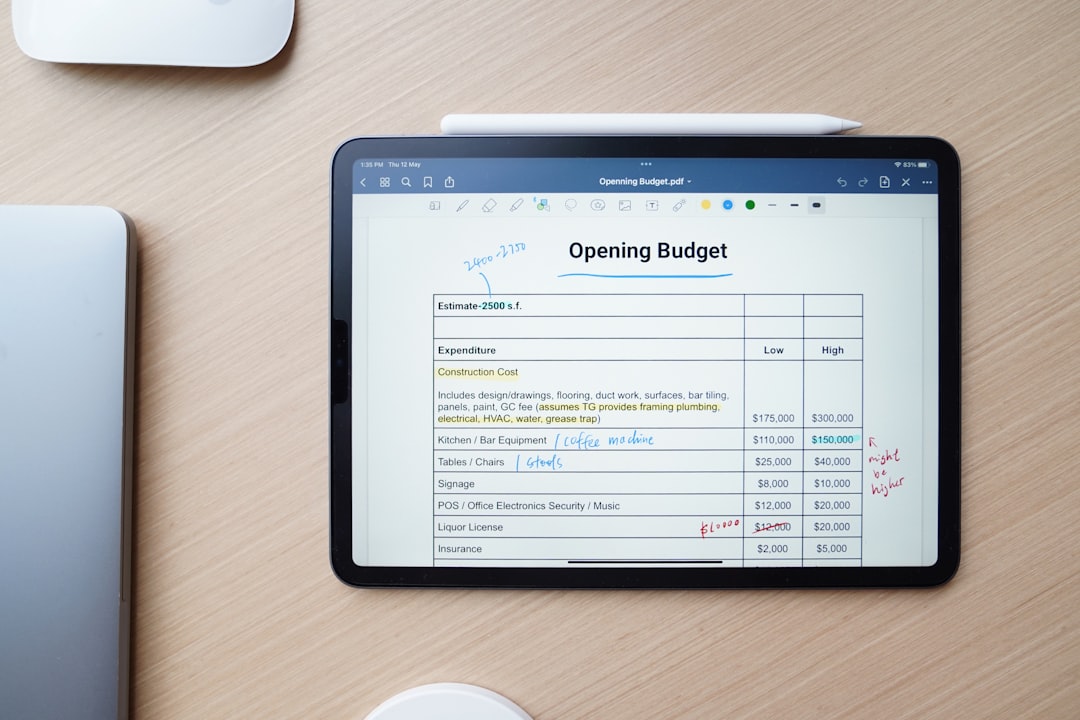
Photo by GoodNotes 5 on Unsplash
By Sky Highway Marketing · Med Spa Marketing Specialists · Last updated June 2026
A practical med spa marketing budget breakdown starts with one rule: spend where people are actively looking for what you offer, then layer in channels that keep them loyal. For most med spas in 2026, that means allocating somewhere between 8% and 12% of gross revenue to marketing, split across paid search, paid social, local SEO, email, and retention — figures grounded in the med spa marketing benchmarks that matter most in 2026. According to the American Med Spa Association (AmSpa), med spas that invest consistently in multi-channel marketing outperform single-channel competitors on both patient acquisition and lifetime value — a trend backed up by the latest med spa industry statistics and trends for 2026. The question isn’t whether to spend. It’s where to put each dollar so it actually comes back to you.
Key Takeaways
- Most med spas should allocate 8–12% of gross revenue to marketing in 2026, split across at least three channels to reduce dependence on any single source.
- According to AmSpa, med spas with structured multi-channel marketing programs report higher patient lifetime value than those relying primarily on word of mouth or a single paid platform.
- Start by auditing your current spend against revenue per channel before reallocating, so you cut waste instead of cutting what’s working.
- The biggest budget mistake med spa owners make is overfunding new patient acquisition while underfunding the retention tools that turn one-time visitors into long-term clients — a dynamic that becomes even clearer when you understand why brand-building beats lead gen for med spas in 2026.
Why Your Med Spa Marketing Budget Needs a Real Structure
Most med spa owners don’t have a budget plan. They have a reaction plan. Something stops working, they spend more on it. A competitor runs aggressive ads, they panic and match it. That approach wastes money fast — and it’s exactly the kind of thinking behind why I’d fire most med spa marketing agencies.
A structured med spa marketing budget breakdown forces you to decide in advance what each dollar is supposed to accomplish — and if you’re still working on filling your appointment book, getting more med spa patients starts with knowing where to spend first. New patient acquisition costs money upfront. Retention and referral programs cost far less per booking. Both need dedicated funding, or you’ll keep riding a revenue rollercoaster: busy one month, scrambling the next.
Before you touch a single budget number, check out how much a med spa should actually spend on marketing as a percentage of revenue. That post lays the foundation this one builds on.
The Med Spa Marketing Budget Breakdown by Channel
Here’s how to think about allocating your budget across the five core categories. These percentages are starting points, not rigid rules. Your market, competition level, and growth stage all affect the right split for you.
| Marketing Channel | Recommended % of Budget | Primary Goal |
|---|---|---|
| Google Ads (PPC) | 25–35% | High-intent new patient acquisition |
| Meta/Instagram Ads | 20–30% | Brand awareness and retargeting |
| Local SEO and Content | 15–20% | Long-term organic visibility |
| Email and SMS Marketing | 10–15% | Retention and reactivation |
| Reputation and Reviews | 5–10% | Trust, conversion, and local SEO boost |
Google Ads: Your Highest-Intent Channel
Google Ads should typically take the largest single slice of your paid budget. When someone searches “Botox near me” or “lip filler [your city],” they’re ready to book. That intent is worth paying for. As costs have risen in 2026 (see our breakdown of why med spa Google Ads costs are rising), you need tighter campaign structure and negative keyword lists to protect your spend.
For most mid-sized med spas, a monthly Google Ads budget of $2,500 to $6,000 is realistic. Competitive urban markets often require more. A med spa that restructures its campaigns around treatment-specific ad groups instead of broad “med spa” terms can realistically see a meaningful reduction in cost-per-lead — in some cases 30–40% — simply by matching ad copy to what patients are actually searching for. Specificity wins.
Meta and Instagram Ads: Awareness Plus Retargeting
Facebook and Instagram ads don’t capture the same direct intent as Google, a key difference explored in our Google Ads vs Social Media Ads comparison for med spas — and the same principle applies when weighing event marketing vs digital ads for med spas. But they’re exceptional at two things: building awareness with local audiences and retargeting people who already visited your website or engaged with your content.
Allocate roughly 20–30% of your total budget here. Split it between cold prospecting campaigns and warm retargeting audiences. Your retargeting campaigns will almost always outperform cold audiences on cost-per-booking, so don’t neglect that warm list. Instagram in particular drives strong results for visual treatments like lip filler, Morpheus8, and body contouring.
Local SEO and Content: The Compound Interest of Marketing
SEO doesn’t produce immediate bookings the way organic vs. paid search strategies compared side by side make clear. But it builds equity that compounds over time. A well-optimized Google Business Profile, consistent blog content, and strong local citations create a floor of organic traffic that doesn’t disappear the moment you pause your ad spend.
Budget 15–20% here, covering Google Business Profile management, on-site content, and local link building. This is also where your Google Business Profile optimization lives, and that single asset can drive more free appointment requests than most owners realize.
The Retention Budget: Stop Underfunding This
Here’s the mistake that costs med spa owners the most money: they pour 80–90% of their budget into acquiring new patients, then spend almost nothing keeping them. Acquiring a new patient costs five to seven times more than retaining an existing one. That’s not a new insight. But most budget plans still ignore it.
Email and SMS marketing combined should take 10–15% of your total budget. Tools like automated appointment reminders, post-treatment follow-up sequences, birthday offers, and win-back campaigns for lapsed clients are all high-ROI and low-cost per touch. If you’re not running these yet, read through the med spa email automation guide to see what a basic retention sequence looks like.
Reputation Management: A Small Budget with Outsized Impact
Your Google reviews directly affect both your local SEO ranking and your conversion rate. A med spa with 4.2 stars loses bookings to a competitor with 4.7 stars, even if everything else is equal. Budget 5–10% toward review generation tools, response management, and monitoring platforms.
According to Statista, the majority of consumers read online reviews before booking a service-based appointment. For med spas specifically, trust is the primary purchase driver. Reviews are not a “nice to have.” They’re a conversion tool.
Budget Allocation by Growth Stage
Your growth stage changes where you should concentrate your spending. A newly opened med spa needs aggressive acquisition — and if you’re in that phase, the first-year med spa marketing playbook walks through exactly where to start. An established practice with a full patient list needs more retention and upsell investment.
Stage 1: New or Growing Med Spa (Under $500K Annual Revenue)
- Prioritize Google Ads and Meta Ads heavily (55–65% combined)
- Invest early in Google Business Profile and basic local SEO
- Keep email/SMS simple: just a welcome sequence and appointment reminders
- Focus on generating your first 50 Google reviews as a foundational trust signal
Stage 2: Established Med Spa ($500K to $1.5M Annual Revenue)
- Rebalance toward retention: increase email/SMS and loyalty program spend
- Add content marketing to build long-term SEO equity
- Introduce retargeting campaigns on Meta to capture warm audiences
- Consider a membership program (and compare memberships vs. pay-per-visit revenue models before committing)
Stage 3: Scaling Med Spa (Over $1.5M or Multiple Locations)
- Add influencer partnerships and referral program investment
- Increase content and SEO spend to support brand authority
- Run location-specific campaigns on Google and Meta
- Invest in CRM infrastructure to track attribution across all channels
Med Spa Marketing Budget Calculator
Built on the benchmarks above — 8–12% of gross revenue, allocated across the five core channels.
Growth stage
Recommended monthly marketing budget
—
| Channel | Share | Per month |
|---|
These are starting points, not rigid rules. Your market, competition level, and website conversion rate all shift the right split — the sections above cover how.
What a Real Med Spa Marketing Budget Looks Like
Let's make this concrete. Say your med spa does $800,000 in annual revenue. At 10% of revenue, your annual marketing budget is $80,000, or roughly $6,667 per month. Here's how that might break down:
- Google Ads: $2,000/month
- Meta/Instagram Ads: $1,500/month
- Local SEO and content: $1,200/month
- Email and SMS tools plus management: $700/month
- Reputation management: $500/month
- Contingency and creative/design: $767/month
That's a balanced, multi-channel approach. None of these numbers are enormous on their own. But together, they cover acquisition, retention, and brand trust simultaneously. The pattern in the industry is that a med spa at this revenue level running a coordinated omnichannel marketing approach — rather than siloed campaigns — can realistically target a 3x to 5x return on total marketing spend when acquisition, retention, and brand trust are all funded.
Common Budget Mistakes to Avoid in 2026
Even with a solid plan, certain patterns consistently drain med spa budgets without producing results. Watch out for these:
- Spending on ads before your website converts. If your site is slow, confusing, or doesn't have a clear booking path, paid traffic is just expensive. Fix the funnel first with med spa landing page optimization before scaling your ad spend.
- Ignoring attribution. If you don't know which channel drove which booking, you can't optimize your spend — and as covered in med spa marketing attribution: you're crediting the wrong channel, most practices are already making this mistake. Basic UTM tracking and a CRM with lead source tracking solve this.
- Chasing the newest platform. TikTok, Pinterest, and whatever launches next can be tested with a small allocation. But don't redirect core budget away from proven channels to chase trends.
- Cutting marketing when things get slow. Slow periods are exactly when you need marketing to work harder. Cutting spend during a slow month guarantees the next month is slower too.
- Treating marketing as a one-time campaign. The med spas winning in 2026 treat marketing as an always-on system, not a series of seasonal pushes — a mindset reinforced by my med spa marketing predictions for the next 12 months and best put into practice with a full-year med spa marketing calendar.
How to Audit Your Current Spend
Before you restructure anything, audit what you're currently spending. List every marketing expense from the past 90 days. Tag each one as acquisition, retention, or brand. Then calculate your estimated revenue contribution from each category.
If more than 80% of your spend is in acquisition and less than 10% is in retention, you have a leak. Clients you've already paid to acquire are walking out and not coming back. That's the most expensive pattern in med spa marketing, and it's fixable with the right allocation shift.
This kind of audit also shows you where your ad ROI benchmarks stand relative to what's actually performing, so you make cuts based on data, not gut feel.
Frequently Asked Questions
What percentage of revenue should a med spa spend on marketing?
Most med spas should allocate between 8% and 12% of gross annual revenue to marketing. New practices in growth mode may spend closer to 15% in the first one to two years. Established practices with strong retention and referral systems can often sustain growth at 8% or below.
What is the most effective marketing channel for med spas in 2026?
Google Ads consistently produces the highest-intent leads for med spas because it captures patients actively searching for treatments. However, the highest overall ROI comes from combining Google Ads for acquisition with email and SMS for retention. Neither works as well alone as they do together.
How much should a med spa spend on Google Ads per month?
A mid-sized med spa in a moderately competitive market typically needs $2,000 to $5,000 per month in Google Ads spend to generate meaningful new patient volume. Highly competitive metros like Miami, Los Angeles, or New York can require $6,000 or more to maintain visibility for high-value treatment keywords.
Should I spend more on new patient acquisition or retention?
Most med spas should spend more on acquisition in their first two years, then shift toward a 60/40 or 50/50 split between acquisition and retention as they build a patient base. Retention costs far less per booking than acquisition, so increasing retention spend typically improves overall marketing ROI significantly.
How do I know if my med spa marketing budget is working?
Track cost per lead, cost per booked appointment, and revenue per channel at minimum. If you can't attribute at least 70% of new bookings to a specific marketing source, your tracking is broken before your budget is. Set up UTM parameters, use a CRM with lead source fields, and review channel performance monthly.
What should a small med spa spend on marketing if the budget is tight?
A small med spa with a limited budget should prioritize Google Business Profile optimization (free), email marketing (low cost, high ROI), and a modest Google Ads campaign over any other paid channel. These three alone can drive consistent bookings without requiring a large monthly spend.
See What AI Says About You
When someone asks ChatGPT or Google for a med spa near you, does your practice come up?
Get My Free AI Visibility Audit
Free, no pitch. See exactly what AI says about med spas in your city, and where you stand.