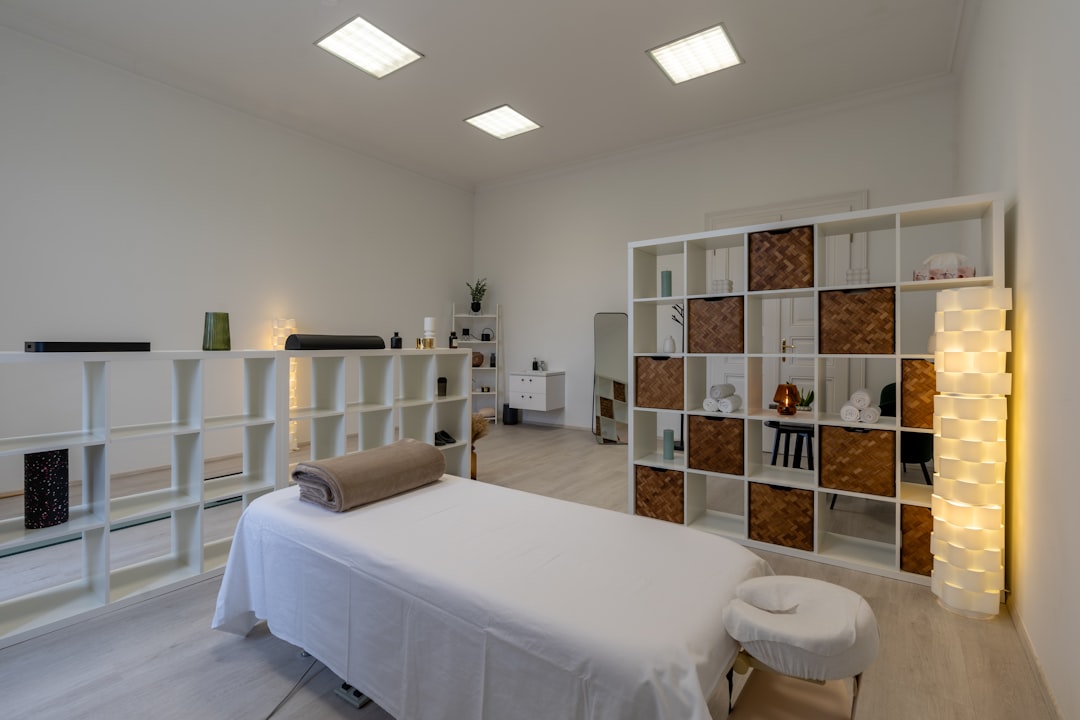
Photo by Jakub Klucký on Unsplash
Your med spa website conversion rate determines whether your marketing budget turns into real bookings — or just traffic that bounces and disappears. You’re spending money on ads, SEO, and social media. However, if your website isn’t built to convert visitors into booked appointments, you’re leaving serious revenue on the table. In 2026, the med spas that win aren’t always the ones with the biggest ad budgets. They’re the ones with websites that do the heavy lifting after the click.
Why Most Med Spa Websites Fail to Convert
Most med spa websites look beautiful but function poorly. They’re designed like digital brochures — not like booking machines. As a result, visitors arrive, scroll through a few pages, and leave without taking any action.
The problem isn’t your services. It’s the experience your website creates for someone who’s never met you. Most websites convert only a small fraction of the visitors who arrive — meaning the majority of people your marketing reaches leave without taking any action. However, a well-structured med spa website — with clear CTAs, fast load times, and visible trust signals — can convert at a meaningfully higher rate than a generic brochure site. That gap represents dozens — sometimes hundreds — of missed bookings every month.
Understanding why visitors don’t convert is the first step. Furthermore, fixing those issues doesn’t require a full website rebuild. In many cases, targeted changes to key pages produce dramatic results within weeks.
The Most Common Conversion Killers
- No clear call-to-action above the fold
- Slow page load times on mobile (over 3 seconds) — learn why med spa website speed directly impacts your bookings
- Generic stock photography instead of real team and patient results
- Booking forms with too many fields
- No social proof visible on service pages
- Confusing navigation that buries your most popular treatments
- No pricing transparency or clear next steps
Each of these issues creates friction. In other words, every extra click, every slow-loading image, and every moment of confusion pushes a potential patient closer to your competitor’s website instead.
The Anatomy of a High-Converting Med Spa Homepage
Your homepage is your digital front door — and as covered in our complete guide to building a high-converting med spa website, every element on it should work toward turning visitors into booked patients. Visitors form a first impression almost immediately, and if your homepage doesn’t answer the basic questions — what you offer, who you serve, how to book — most will leave before they scroll. Because of this, your homepage must immediately answer three questions: What do you offer? Who do you serve? How do I book?
Above the Fold: Your First Impression
Everything visible before a visitor scrolls is your above-the-fold section. This real estate is the most valuable on your entire website. Use it wisely.
Your headline should speak directly to the result your patient wants — not a generic tagline about luxury. For example, “Look Younger Without Downtime — Book Your Consultation Today” outperforms “Welcome to Serenity Med Spa” every single time.
Place your booking button or phone number prominently in the top navigation and again within the hero section. Furthermore, use a real photo of your team or a before-and-after result (with proper consent) rather than a stock image. Authenticity builds trust faster than anything else.
Social Proof Should Appear Immediately
Patients choosing a med spa are making decisions about their appearance and health, and reviews are often the closest thing they have to a trusted referral — which is why social proof needs to be visible before a visitor has to go looking for it. Most importantly, med spa patients are making decisions about their appearance and health. Trust is everything.
Feature a rotating strip of Google reviews or star ratings directly below your hero section. Link to your med spa Google reviews strategy to understand how to generate a steady stream of 5-star reviews that power this section.
In addition, include the number of patients served, years in business, or provider credentials. These small trust signals convert skeptical visitors into curious ones — and curious visitors into booked appointments.
Med Spa Website Conversion Starts With Your Service Pages
Your service pages are where purchase decisions actually happen. However, most med spa service pages read like medical textbooks or marketing fluff. Neither approach converts well.
Each service page should follow a proven structure that mirrors how your ideal patient thinks when they’re researching a treatment.
The High-Converting Service Page Formula
- Lead with the outcome the patient wants — not the technical name of the procedure
- Explain what the treatment is in plain, conversational language
- Address the most common fears or objections (Does it hurt? How long does it take? Is there downtime?)
- Show real before-and-after results with proper consent and context
- Display pricing or “starting at” ranges so visitors self-qualify
- Feature 2-3 patient testimonials specific to that treatment
- End with a prominent booking CTA that removes friction
Furthermore, include an FAQ section at the bottom of each service page. This serves double duty: it answers objections before they stop a conversion, and it helps your page rank for long-tail search queries in Google.
If you’re running paid traffic to these pages, make sure the message on the ad matches the message on the landing page exactly. Mismatched messaging is one of the top reasons med spa ad campaigns waste money before they even get a chance to work.
Speed, Mobile, and Technical Factors That Kill Conversions
You can have the most beautiful, well-written website in your market. However, if it loads slowly on a smartphone, none of it matters. In 2026, the majority of med spa website traffic arrives on mobile devices, and a site that loads slowly or breaks on a small screen is effectively invisible to most of its potential patients. As a result, mobile performance isn’t optional — it’s the foundation of your conversion strategy.
Mobile Speed Benchmarks You Need to Hit
- Page load time under 3 seconds on mobile
- Google Core Web Vitals score of “Good” across all three metrics
- No intrusive pop-ups that block content on mobile
- Click-to-call buttons on every page for mobile users
- Booking forms that work smoothly on touchscreens
Use Google’s PageSpeed Insights tool to audit your current performance. In addition, compress your images before uploading them — large image files are the number-one cause of slow load times on med spa websites.
Your Google Business Profile also plays a major role in driving mobile traffic to your website. If you haven’t optimized it for 2026, read our guide on med spa Google Business Profile optimization to understand how local search and your website work together.
The Booking Experience: Where Most Conversions Are Lost
You’ve done everything right. A visitor found your website, read through your services, and decided they want to book. Then they hit your booking form — and leave. This scenario happens constantly, and it’s entirely preventable.
Friction-Free Booking Best Practices
Your booking process should require as few steps as possible. Every extra field you add to a contact form is another small reason for a hesitant visitor to abandon it — and the longer the form, the sharper that drop-off tends to be. That means a 10-field form converts dramatically worse than a 3-field form.
For initial inquiries, capture only what you need: name, phone number, and the service they’re interested in — because overly complex med spa intake forms can cost you bookings before the relationship even begins. You can gather everything else during the confirmation call or intake process.
Furthermore, offer multiple booking pathways for different types of visitors — and if you’re weighing whether an AI chatbot or a live chat agent should handle those conversations, see our breakdown of chatbot vs live chat for med spas and which books more:
- Book Online — for visitors who are ready to commit
- Call or Text Us — for visitors who have questions first
- Request a Consultation — for visitors who need education before booking
Not every visitor is ready to book immediately. In other words, forcing everyone into a single conversion path means you’ll lose the ones who aren’t quite ready yet. Capture them with the right option and use email automation to nurture them toward booking over the following days.
Trust Elements That Accelerate Med Spa Website Conversion
Patients choosing a med spa are trusting someone with their face and body. As a result, trust-building elements on your website aren’t just nice to have — they’re conversion requirements.
What to Display Prominently on Every Page
- Provider credentials, certifications, and years of experience
- Association memberships (such as the American Med Spa Association)
- Real team photos — not stock photos
- Before-and-after results with realistic, honest framing
- Google and Yelp review ratings with direct links
- HIPAA compliance statements where relevant
- Physical address, phone number, and hours visible in the footer
In addition, consider adding a short video introduction from your lead provider. Most importantly, video humanizes your practice in a way that static text and photos cannot — visitors who watch an introduction from your lead provider tend to stay longer and arrive at their consultation with a warmer disposition. Most importantly, video humanizes your practice and builds rapport before a patient ever walks through your door.
A Real Example: What a Conversion Optimization Can Do
Consider a med spa in the Dallas market that was generating 4,000 monthly website visitors from a combination of Google Ads and organic search. Their website was converting at 1.8% — producing about 72 leads per month.
After restructuring their service pages, reducing booking form fields, adding above-the-fold social proof, and improving mobile load time, their conversion rate climbed to 5.4%. Same ad spend. Same traffic. However, they went from 72 leads per month to 216 leads — a 3x increase with zero additional marketing cost.
This is the leverage that med spa website conversion optimization provides. Furthermore, every improvement you make compounds — faster pages rank better, better-converting pages produce a lower cost-per-lead from ads, and more leads mean more data to optimize further.
How to Prioritize Your Website Conversion Fixes in 2026
You don’t need to fix everything at once. Instead, work through this priority order based on what drives the highest impact with the least effort.
Your 90-Day Conversion Improvement Roadmap
- Month 1 — Foundation: Fix mobile speed, add click-to-call, simplify your booking form, and ensure your homepage has a clear above-the-fold CTA
- Month 2 — Trust and Social Proof: Add Google review widgets, update team photos, feature before-and-afters on service pages, and add provider credentials
- Month 3 — Content and Optimization: Rewrite service pages using the formula above, add FAQ sections, implement A/B testing on CTAs, and connect your website to Google Analytics 4 to track conversion events
Furthermore, tie your website into your full marketing ecosystem. Your social media content should drive traffic to specific service pages. Your email campaigns should link to optimized landing pages. Your Google Ads should send clicks to pages that mirror the ad message exactly — and each of those pages should fit within a clearly defined med spa marketing funnel that moves prospects from awareness to booked appointment. For inspiration on how social content feeds your website funnel, review these med spa social media content ideas that get bookings.
Most importantly, treat your website as a living asset — not a one-time project. The med spas that consistently outperform their competition test, measure, and improve their websites on an ongoing basis.
When to Bring in a Med Spa Marketing Specialist
There’s a point where DIY website optimization hits a ceiling. If you’ve made the basic improvements and your conversion rate still isn’t reaching 5% or higher, the problem is likely deeper — in your messaging, your offer structure, or your ad-to-landing-page alignment.
That’s where a specialist agency makes the difference. Sky Highway Marketing works exclusively with med spa owners to build and optimize websites that convert traffic into real, booked appointments. Because of this focused expertise, their recommendations aren’t generic — they’re built around what actually works in the med spa market in 2026.
In addition, the right partner doesn’t just fix your website in isolation. They align your website with your ads, your email follow-up, your Google presence, and your overall growth strategy. Sky Highway Marketing does exactly that — and the results speak for themselves.
See What AI Says About You
When someone asks ChatGPT or Google for a med spa near you, does your practice come up?
Get My Free AI Visibility Audit
Free, no pitch. See exactly what AI says about med spas in your city, and where you stand.